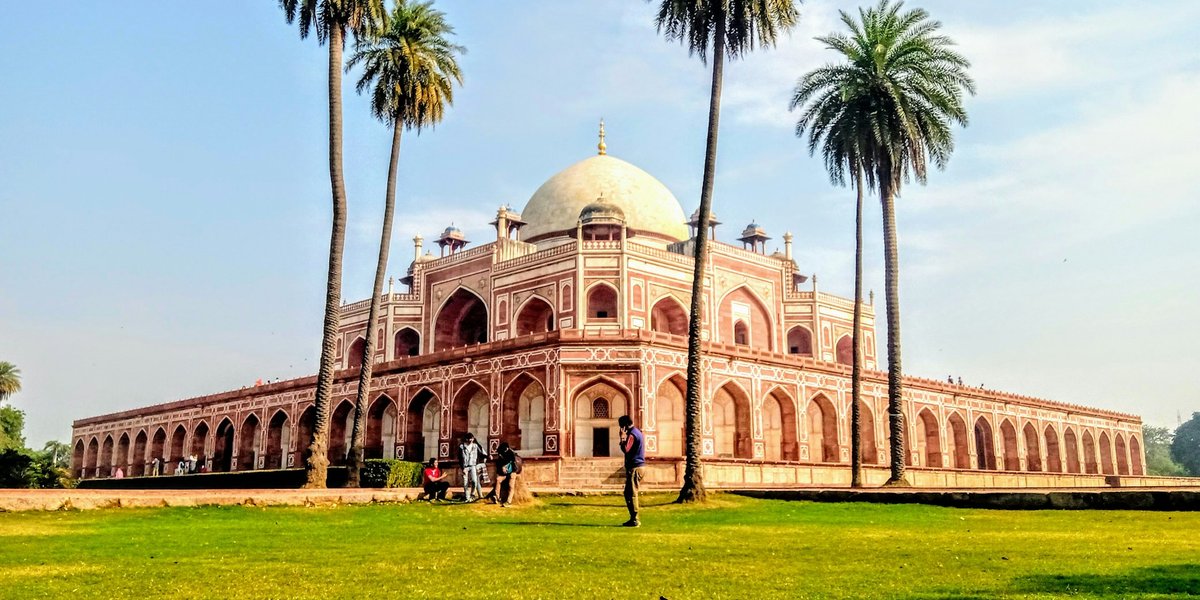
Humayun's Tomb at golden hour, Lodhi Art District murals, and Chandni Chowk street scenes — here are Delhi's top photography locations.
Humayun's Tomb at golden hour is Delhi's single best photography location — the sandstone glows amber in the low sun, and the Mughal symmetry gives you compositions that practically frame themselves. But Delhi has dozens of strong locations across every genre, from street photography to architecture to contemporary art.
Here's a working list of where to shoot, organised by what you're after.
Architectural & Heritage Photography
Humayun's Tomb
The obvious first pick, and for good reason. This 16th-century Mughal tomb sits in manicured gardens with sight lines in every direction. Best time: 45 minutes before sunset, from the south garden looking north. The warm light catches the red sandstone and white marble inlays perfectly. Winter golden hour (4:30-5:30pm) is the sweet spot — summer pushes it to 6-7pm.
Entry is ₹40 for Indian nationals, ₹600 ($7.20) for foreigners. Nearest metro: JLN Stadium (Violet Line), then a 10-minute auto ride.
Agrasen ki Baoli
A 14th-century stepwell on Hailey Road, tucked between office buildings near Connaught Place. The 108 steps descend in perfect symmetry into darkness — the geometry is extraordinary for photography. Wide-angle lenses work best. Visit 10am-12pm when sunlight reaches the lower levels. Free entry. For more on the history, see our Agrasen ki Baoli guide.
Qutub Minar
The 73-metre minaret is India's tallest. Shoot from the base looking up for dramatic verticals, or step back into the surrounding ruins of the Quwwat-ul-Islam mosque for wide compositions. Late afternoon light is best — the iron pillar nearby catches direct sun around 3-4pm in winter.
Safdarjung Tomb
Less crowded than Humayun's Tomb with similar Mughal architecture. The entrance gate frames the main tomb perfectly — stand centred in the archway for a natural frame-within-a-frame shot. ₹25 for Indians, ₹300 for foreigners.
Street Photography
Chandni Chowk & Old Delhi
This is the real reason photographers come to Delhi. The lanes between Chandni Chowk metro station and Jama Masjid pack more visual density per square metre than almost anywhere in Asia. Spice traders, cycle rickshaws, chai stalls, crumbling havelis, and overhead wiring create chaotic, layered frames.
Shoot early. The 7-9am window gives you soft light, fewer crowds, and shopkeepers setting up — which makes for more candid moments than the midday crush. Read our Old Delhi guide for getting around the lanes.
Be respectful. Ask before shooting portraits, especially around Jama Masjid and in residential galis. Most people are happy to be photographed once you've made eye contact and smiled.
Nizamuddin Basti
The neighbourhood around Nizamuddin Dargah is Old Delhi without the tourist crowds. Narrow lanes, shrine sellers, qawwali musicians warming up, and families heading to prayer. Thursday evenings are most photogenic when the dargah fills with devotees and Sufi singers.
Contemporary Art & Street Art
Lodhi Art District
Over 50 large-scale murals by international and Indian artists cover apartment buildings and boundary walls in Lodhi Colony. This is Delhi's only open-air art gallery and it's completely free. Walk the circuit between Lodhi Colony metro (Violet Line) and Jor Bagh metro (Yellow Line). Overcast days are actually better here — no harsh shadows on the murals.
Full details in our street art guide.
Sunder Nursery
Adjacent to Humayun's Tomb, this restored Mughal-era garden has palm-lined walkways, heritage structures, and water channels. The gardens are manicured but not sterile — they feel lived-in. Good for softer, editorial-style photography. ₹30 entry.
Golden Hour & Landscape Shots
India Gate at Dusk
The war memorial looks best just after sunset when the floodlights come on and the sky fades to deep blue. Shoot from the lawns to the west for reflections in the water channels. Weekends are crowded with families — weekday evenings are calmer.
Lodhi Gardens at Sunrise
Delhi's most popular park has Mughal-era tombs scattered among old trees. The morning mist between November and February creates atmospheric shots, especially around the Bara Gumbad and Sheesh Gumbad tombs. Enter from the gate nearest Jor Bagh metro (Yellow Line).
Practical Tips
Tripods are banned at most ASI monuments (including Humayun's Tomb, Qutub Minar, and Red Fort) without special permission. Handheld or monopod only.
Drone photography requires DGCA approval and is banned over most of central Delhi due to security zones. Don't risk it.
Best months: October to February. The light is warm, pollution clears somewhat after November rains, and mornings are misty. March-May is hazy. Monsoon (July-September) brings dramatic skies but unpredictable downpours.
FAQ
Where is the best golden hour photography spot in Delhi?
Humayun's Tomb is the best golden hour spot in Delhi. Arrive 45 minutes before sunset and position yourself at the south-facing garden for warm light hitting the main tomb. The symmetry and sandstone glow are best between 4:30-5:30pm in winter and 6-7pm in summer. Entry is ₹40 for Indians, ₹600 for foreigners.
Can I do street photography in Old Delhi?
Yes. Chandni Chowk and the lanes around Jama Masjid are some of the best street photography locations in Asia. Shoot early morning (7-9am) for the best light and fewer crowds. Be respectful — ask permission before photographing people up close, especially around the mosque and residential areas.
Is Agrasen ki Baoli good for photography?
Yes. Agrasen ki Baoli is a 14th-century stepwell on Hailey Road near Connaught Place with dramatic symmetrical stairs descending into darkness. The geometric lines photograph beautifully. Visit between 10am-12pm when light reaches the bottom. Free entry. Less crowded on weekday mornings.